

Tire Technology International
  • News
    • A-D
      • Appointments
      • Apps
      • Awards
      • Business
      • Certification
      • Components
      • Corporate Social Responsibility
      • Data management
      • Design
      • Distribution
    • E-N
      • Education
      • Factory logistics
      • Headquarters
      • Industry 4.0
      • Investments
      • Machine Vision & Inspection
      • Manufacturing Facilities
      • Materials
      • New tires
    • O-S
      • OE Fitments
      • Partnerships
      • People
      • Regulations
      • Research & Development
      • Retreading
      • Sales facilities
      • Show News
    • S-Z
      • Simulation
      • Sustainability
      • Testing & Analysis
      • Tire Building
      • Tire handling
      • Tire Modeling & Digital Tools
      • Tire Recycling
      • TPMS & Electronics
  • Features
  • Online Magazines
    • November 2025
    • Annual Showcase 2025
    • October 2025
    • July 2025
    • March/April 2025
    • November 2024
    • Annual Showcase 2024
    • October 2024
    • July 2024
    • March 2024
    • Archive Issues
    • Subscribe Free!
  • Opinion
  • Videos
  • Supplier Spotlight
  • Tire Expo
LinkedIn Facebook Twitter
  • Automotive Interiors
  • Automotive Testing
  • Autonomous Vehicle
  • Automotive Powertrain
  • Professional Motorsport
  • Media Pack
LinkedIn Facebook
Subscribe
Tire Technology International
  • News
      • Appointments
      • Apps
      • Awards
      • Business
      • Certification
      • Components
      • Corporate Social Responsibility
      • Data management
      • Design
      • Distribution
      • Education
      • Factory logistics
      • Headquarters
      • Industry 4.0
      • Investments
      • Machine Vision & Inspection
      • Manufacturing Facilities
      • Materials
      • New tires
      • OE Fitments
      • Partnerships
      • People
      • Regulations
      • Research & Development
      • Retreading
      • Sales facilities
      • Show News
      • Simulation
      • Sustainability
      • Testing & Analysis
      • Tire Building
      • Tire handling
      • Tire Modeling & Digital Tools
      • Tire Recycling
      • TPMS & Electronics
  • Features
  • Online Magazines
    1. November 2025
    2. Annual Showcase 2025
    3. October 2025
    4. July 2025
    5. March/April 2025
    6. November 2024
    7. Annual Showcase 2024
    8. October 2024
    9. July 2024
    10. March 2024
    11. 年国际轮胎技术年刊
    12. Subscribe Free!
    Featured
    27th November 2025

    In this Issue – Annual Showcase 2025

    Online Magazines By Web Team
    Recent

    In this Issue – November 2025

    12th December 2025

    In this Issue – Annual Showcase 2025

    27th November 2025

    In this Issue – October 2025

    7th October 2025
  • Opinion
  • Videos
  • Awards
    • Tire Technology International Awards 2026
    • 2025 Winners
    • 2024 Winners
    • 2023 Winners
    • 2022 Winners
    • 2020 Winners
    • Previous Winners
  • Supplier Spotlight
  • Tire Expo
LinkedIn Facebook
Subscribe
Tire Technology International
Opinion

OPINION: Harmonization is the superpower tire emissions research needs now

Dr Stephan Wagner, head of the Institute for Analytical Research at the Hochschule Fresenius University of Applied SciencesBy Dr Stephan Wagner, head of the Institute for Analytical Research at the Hochschule Fresenius University of Applied Sciences16th December 20256 Mins Read
Share LinkedIn Twitter Facebook Email
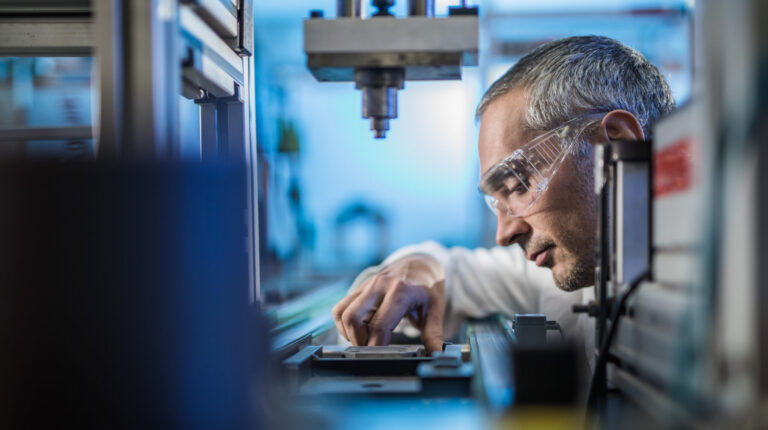
A scientist wearing safety glasses and a white lab coat looks at a sample on a table

Each time a vehicle is driven, friction and the transfer of force between the tire and the road cause particles to be released from both the tire tread and the road surface. These are known as tire and road wear particles (TRWP) and are made up of approximately a half-and-half mixture of tire tread and road pavement materials.

Despite decades of academic and industry research, there is still a lot more work to be done to understand the real-world risks of TRWP. With growing environmental pressures and policy interest, the need to accelerate scientific knowledge is higher than ever. But this cannot be done in isolation — it demands harmonization: credible, collaborative research built on aligned approaches across various stakeholders.

The mandate for harmonization in TRWP science

The State of Knowledge (SOK) papers, supported by the Tire Industry Project (TIP), provide the most comprehensive review of tire wear emissions science to date, analyzing more than 850 peer-reviewed studies.

The SOK findings bring clarity to an extremely fragmented field. What exists today are different studies that define and measure tire wear emissions in different ways: some focus only on airborne particles, while others include particles deposited on road surfaces, soils, or transported into waterways. In addition, some studies also examine volatile and dissolved compounds released during tire use. Many of these use different definitions and measurement approaches that lead to widely varying estimates of tire wear emissions, making comparisons difficult.

The result is that numbers often vary dramatically – figures that make headlines but are difficult for regulators or the public to put in the right context. This in turn creates a risk that decisions could be made on incomplete or qualified data that is based on specific assumptions. Without harmonized methods and definitions, stakeholders could end up latching onto the biggest number, not the most reliable one.

This inconsistency isn’t limited to the quantum of wear emissions. Measurement protocols vary, particle sizes are classified differently, and environmental pathways are described using different terminologies. Taken together, the evidence base is growing in volume but not always in coherence.

Why this matters now

Non-exhaust emissions from road transportation, which include tire and brake wear, are increasingly in the spotlight as tailpipe emissions decline with the rise of electric vehicles. Regulatory bodies in the EU, UK, USA and beyond are considering how to assess and manage tire wear emissions. The complexity of the current evidence base, however, presents a significant challenge: without a harmonized framework, regulators must navigate data that is often incomplete or inconsistent, making it difficult to establish robust, evidence-based policy.

At the same time, public awareness is rising, leading to mounting pressure for answers. While past research has generated a large volume of data, this science remains siloed. Consequently, without solid, harmonized science, there is a risk of pursuing ineffective solutions. For example, should regulation focus on tire weight limits, vehicle technology, driving speed regulation or road infrastructure? Harmonization is the tool that ensures policy is grounded in the most reliable evidence, not just the loudest opinions.

Lessons from other fields

This is not unprecedented. In other complex fields, harmonization has provided a baseline for scientific progress and coordinated action:

  • Good Laboratory Practice (GLP) protocols built trust in chemical and pharmaceutical safety studies.
  • WHO air and water quality thresholds created a global baseline for environmental health responses, enabling countries to align efforts.
  • REACH chemical safety regulation in the EU succeeded by harmonizing how risk data was reported and assessed.

These examples show how harmonization can accelerate science, inform policy and build public trust.

What harmonization could deliver

Harmonization in tire science could take several forms:

  • Shared terminology for TRWP that distinguishes between airborne, dissolved and particulate fractions.
  • Agreed analytical guidelines, so that results from different labs can be compared and combined.
  • Adapted frameworks for risk assessment, drawing on lessons learned from other fields but tailored to the unique characteristics of TRWP. This includes a tiered methodology that begins with lab-generated materials such as cryogenically milled tire tread (CMTT) and progresses toward real-world roadway samples.
  • Validation of the conceptual exposure model, to map how tire wear emissions are generated, dispersed and encountered in the environment.

These steps, outlined in the SOK papers, would enable researchers to close data gaps more systematically, regulators to design proportionate policies and industry to target innovation where it has the greatest impact.

What needs to happen next

The path forward requires coordinated action:

  • The industry and the scientific community need to develop and apply harmonized protocols, so new studies add to a coherent evidence base. For example, systematic studies on the effect of electrification of the vehicle fleet on tire wear emissions, and studies on quantification of human and environmental exposure routes.
  • Regulators should support the adoption of harmonized frameworks in emerging policy discussions, ensuring rules are based on consistent science. For instance, developing and implementing harmonized sampling protocols for tire wear emissions in the environment.
  • Industry should invest in collaborative research and data sharing, helping to test and refine harmonized methods.

Standing at the edge of progress

New analytical methods, modeling techniques and collaborations are emerging, but without coordinated action, the field risks falling short.

The SOK papers offer a path forward by strengthening the scientific foundations needed for the next phase of progress. TIP’s role in supporting this work reflects its commitment to credible science, collective learning and industry-wide solutions, a role it has been playing for several years in partnership with academia.

The opportunity is here – but it will not wait forever. As vehicle technologies evolve, as electrification reshapes transportation and as scrutiny on tire emissions grows, the need for a coherent, harmonized approach will only intensify. The sooner we align, the sooner we can translate scattered insights into credible evidence – and develop meaningful, effective solutions to mitigate tire wear emissions.

About the author

Dr Stephan Wagner is head of the Institute for Analytical Research at the Hochschule Fresenius University of Applied Sciences in Idstein, Germany. He is an expert in the analysis and fate of anthropogenic materials such as tire and road abrasion particles, micro and nano plastics, nanomaterials as well as organic trace contaminants in the (urban) water cycle. 

Share. Twitter LinkedIn Facebook Email
Previous ArticleVredestein van range expanded with addition of new Comtrac 2+

Related Posts

Opinion

Opinion: How Michelin’s ResiCare helped make 100 million tires

27th June 20253 Mins Read
Opinion

OPINION: Extending tire life with smarter tech – a new chapter for SUVs

2nd May 20255 Mins Read
Opinion

OPINION: EU regulations boost demand for tire-derived pyrolysis oil in chemical recycling

13th March 20255 Mins Read
Latest News

OPINION: Harmonization is the superpower tire emissions research needs now

16th December 2025

Vredestein van range expanded with addition of new Comtrac 2+

16th December 2025

Conti re-elected co-chair of the Tire Industry Project

16th December 2025

Receive breaking stories and features in your inbox each week, for free


Enter your email address:


Supplier Spotlights
  • The Poling Group
Getting in Touch
  • Contact Us
  • Meet The Editors
  • Download Media Pack
  • Free Weekly E-Newsletter
Our Social Channels
  • Facebook
  • LinkedIn
RELATED UKI TOPICS
  • Automotive Interiors
  • Automotive Testing
  • Autonomous Vehicle
  • Automotive Powertrain
  • Professional Motorsport
  • Media Pack
© 2025 UKi Media & Events a division of UKIP Media & Events Ltd
  • Terms and Conditions
  • Privacy Policy
  • Cookie Policy
  • Notice & Takedown Policy

Type above and press Enter to search. Press Esc to cancel.

We use cookies on our website to give you the most relevant experience by remembering your preferences and repeat visits. By clicking “Accept”, you consent to the use of ALL the cookies.
Cookie settingsACCEPT
Manage consent

Privacy Overview

This website uses cookies to improve your experience while you navigate through the website. Out of these, the cookies that are categorized as necessary are stored on your browser as they are essential for the working of basic functionalities of the website. We also use third-party cookies that help us analyze and understand how you use this website. These cookies will be stored in your browser only with your consent. You also have the option to opt-out of these cookies. But opting out of some of these cookies may affect your browsing experience.
Necessary
Always Enabled

Necessary cookies are absolutely essential for the website to function properly. These cookies ensure basic functionalities and security features of the website, anonymously.

CookieDurationDescription
cookielawinfo-checkbox-necessary1 yearSet by the GDPR Cookie Consent plugin, this cookie records the user consent for the cookies in the "Necessary" category.
elementorneverThe website's WordPress theme uses this cookie. It allows the website owner to implement or change the website's content in real-time.

Advertisement

Advertisement cookies are used to provide visitors with relevant ads and marketing campaigns. These cookies track visitors across websites and collect information to provide customized ads.

CookieDurationDescription
OAGEOsessionOpenX sets this cookie to avoid the repeated display of the same ad.
OAID1 yearCookie set to record whether the user has opted out of the collection of information by the AdsWizz Service Cookies.
test_cookie15 minutesdoubleclick.net sets this cookie to determine if the user's browser supports cookies.
VISITOR_INFO1_LIVE5 months 27 daysYouTube sets this cookie to measure bandwidth, determining whether the user gets the new or old player interface.
YSCsessionYoutube sets this cookie to track the views of embedded videos on Youtube pages.
yt-remote-connected-devicesneverYouTube sets this cookie to store the user's video preferences using embedded YouTube videos.
yt-remote-device-idneverYouTube sets this cookie to store the user's video preferences using embedded YouTube videos.
yt.innertube::nextIdneverYouTube sets this cookie to register a unique ID to store data on what videos from YouTube the user has seen.
yt.innertube::requestsneverYouTube sets this cookie to register a unique ID to store data on what videos from YouTube the user has seen.

Analytics

Analytical cookies are used to understand how visitors interact with the website. These cookies help provide information on metrics the number of visitors, bounce rate, traffic source, etc.

CookieDurationDescription
CONSENT2 yearsYouTube sets this cookie via embedded YouTube videos and registers anonymous statistical data.
_ga1 year 1 month 4 daysGoogle Analytics sets this cookie to calculate visitor, session and campaign data and track site usage for the site's analytics report. The cookie stores information anonymously and assigns a randomly generated number to recognise unique visitors.
_ga_*1 year 1 month 4 daysGoogle Analytics sets this cookie to store and count page views.

Functional

Functional cookies help to perform certain functionalities like sharing the content of the website on social media platforms, collect feedbacks, and other third-party features.

CookieDurationDescription
__cf_bm30 minutesCloudflare set the cookie to support Cloudflare Bot Management.

SAVE & ACCEPT
Powered by