

Yokohama Rubber has unveiled the results of the international joint research project on preventing and controlling rubber tree leaf fall diseases. The findings were presented on December 9 at the 5th Joint Coordinating Committee Meeting at Universitas Indonesia.
The project, which aims to achieve the sustainable production and use of natural rubber, has been selected as a research project for the Science and Technology Research Partnership for Sustainable Development (SATREPS) program, which is jointly implemented by the Japan Science and Technology Agency (JST), the Japan International Cooperation Agency (JICA), with support from Japan’s Ministry of Foreign Affairs and the Ministry of Education, Culture, Sports, Science and Technology.
The international project is being conducted jointly by industry, government and academic institutions in Japan, including the national research and development agency RIKEN, and institutions in Indonesia, the world’s second largest producer of natural rubber.
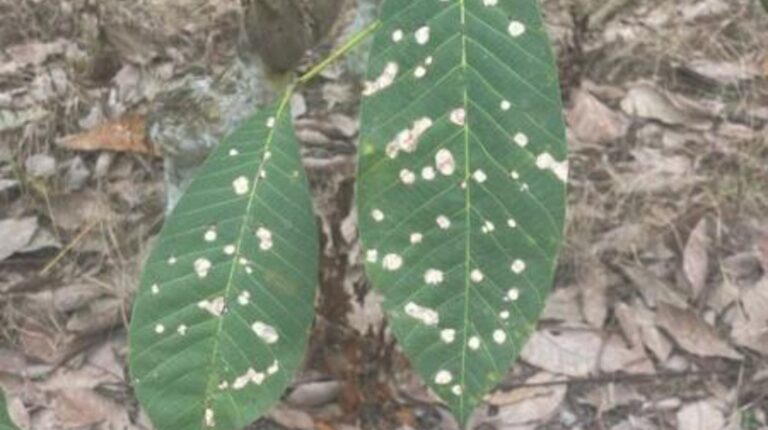
Most of the natural rubber currently used by industry, including as a raw material for tires, is made from the sap of the Para rubber tree. However, leaf fall disease has become widespread, especially in Indonesia, causing serious damage to rubber production. The project aims to stabilize production for smallholders, which account for more than 90% of Indonesia’s natural rubber production, through a multifaceted approach that includes using pesticides to exterminate leaf fall disease, establishing technology for breeding disease-resistant clones, and using images from satellites and drones to detect infected areas in the early stages.
Yokohama Rubber has been participating as a cooperating corporation since the project was launched in 2020 and since 2024 has been studying the effect of pesticides on the quality of natural rubber.
Field evaluations on large plantations have confirmed that properly applied pesticides do not negatively affect rubber’s properties nor the properties of vulcanized rubber, and Yokohama Rubber is currently cooperating in a survey to determine how the smallholders targeted by this research may be affected.
The company is also participating as an official partner institution on the SATREPS research project for utilization technology of rubber seeds for green products to mitigate global warming and plastic pollution, which aims to solve environmental problems through the effective use of natural rubber seeds.
In related news, Teijin has launched a high-strength, sustainable para-aramid