

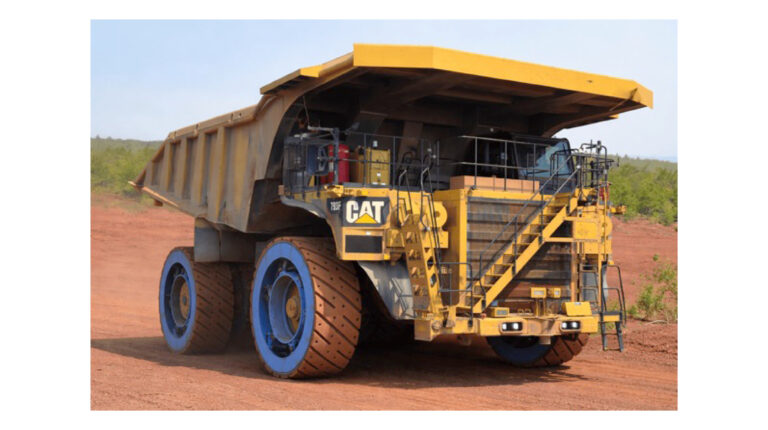
After years of engineering development and large-scale field testing, Global Air Cylinder Wheels (GACW), the Phoenix-based developer of the Air Suspension Wheel (ASW), has announced a key milestone in the transition from research and development to commercial deployment for 2026, following successful extreme-condition validation trials in Minnesota mining operations.
The recent winter trial subjected the company’s non-pneumatic mechanical wheel system to real-world operating conditions in Minnesota in December, with temperatures ranging from approximately -29°C to -40°C under full production loads and operational conditions. The testing focused on validating suspension performance, tread compounds, lubrication systems, and traction in extreme sub-zero mining conditions.
“We’ve already proved our wheel works in the real world,” said Harmen van Kamp, CEO of Global Air Cylinder Wheels. “The wheel is real. Now we’re focused on making it better and preparing it for commercial release.”
The Minnesota program evaluated multiple polyurethane tread compounds with varying hardness levels. According to the GACW team, all three configurations performed well in the extreme cold, showing no observable degradation or failure in suspension cylinders, O-rings, bearings or lateral restraint systems during testing.
Cold-start performance and lubrication systems were closely monitored throughout the trial. Traction was evaluated on significant grade ramps under full payload conditions.
In addition to extreme cold performance, prior testing in wet and muddy conditions demonstrated the mechanical wheel’s point-load design can penetrate surface mud and clay layers to reach firmer ground, improving traction while avoiding the rock-cutting vulnerability and flat tire risk associated with rubber tires.
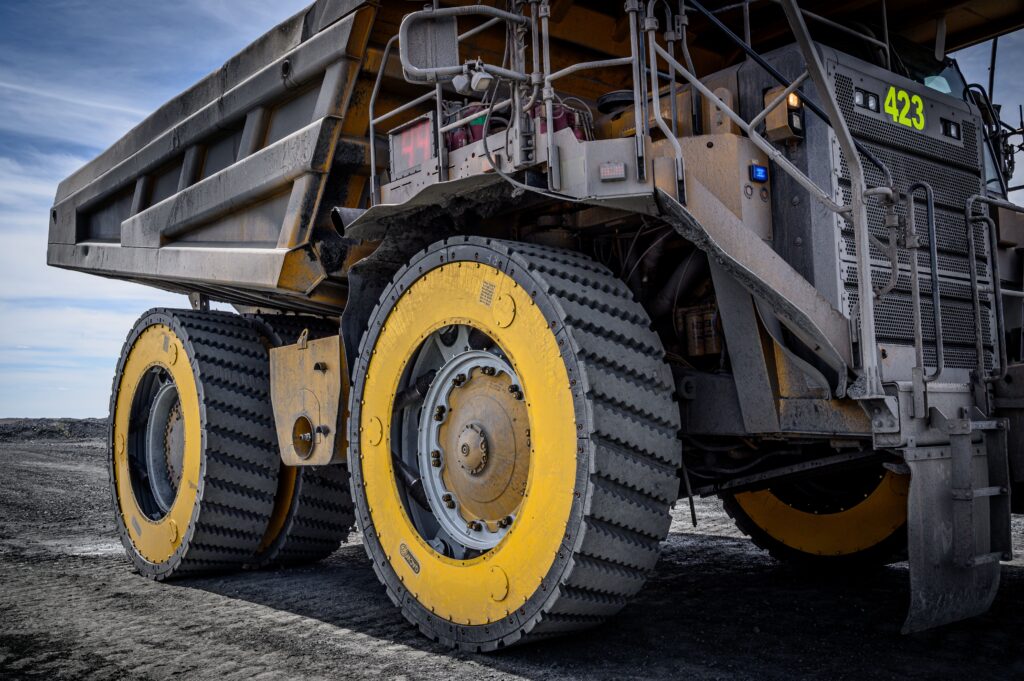
GACW’s ASW is a primarily steel-based, non-pneumatic wheel integrating nitrogen-filled suspension cylinders and dampers. The design eliminates stored energy risk associated with high-pressure tire failures and reduces exposure during maintenance procedures.
“Our focus has always been solving one of mining’s most dangerous and logistically complex maintenance challenges,” Van Kamp said. “Field validation under full production conditions gives operators confidence that this technology can perform where it matters most.”
The trial also marked validation of the company’s 13th-generation suspension cylinder design. The core suspension system no longer requires functional redesign, with current efforts focused on manufacturing maturity and production readiness.
To support its transition to full commercial operations, GACW has expanded its operational infrastructure, including the appointment of a dedicated quality manager and the implementation of ISO-aligned quality management systems. The company has completed its preliminary audit and is progressing through the final stages of accreditation, with full ISO certification anticipated by May 2026. These processes are designed to ensure supply chain traceability, manufacturing repeatability and global service readiness as commercial production scales.
Negotiations with select global mining operators are already underway, with the company entering advanced discussions for its initial commercial deployments. According to company leadership, the first phase is expected to involve approximately eight truck configurations, representing potential revenue of approximately US$8m based on initial deployment scope, with manufacturing targeted to commence mid-2026 following final purchase order execution.
GACW expects initial deployments of a few trucks to be followed by expanded adoption across additional sites as performance data is gathered and internal approvals are completed. The company’s initial geographic focus includes the USA, Canada, Australia and select South American markets.
As part of its commercialization strategy, GACW is introducing a ‘Wheels as a Service’ model that allows mining operators to adopt the ASW under an operating expenditure structure rather than capital expenditure, reducing adoption friction while supporting lifecycle service continuity.
The ASW is designed to last the lifespan of a haul truck, estimated at 10-15 years, with replaceable tread segments and rebuildable components engineered to reduce waste and improve long-term cost predictability.
Although mining represents the first large-scale commercial focus, GACW’s ASW was conceived as a scalable mechanical platform. The company’s patent portfolio supports potential future adaptation across heavy construction equipment, armored and specialty vehicles, commercial transportation applications and smaller mobility formats such as wheelchairs and bicycles.
“We’ve completed the testing validation phase,” Van Kamp said. “Now it’s about disciplined execution, manufacturing maturity, and delivering a safer alternative to traditional mining tires.”
You can read more about GACW in TTI’s November 2023 issue.
Related news, Three-year extension sees Kumho continue as an official tire of Formula Drift