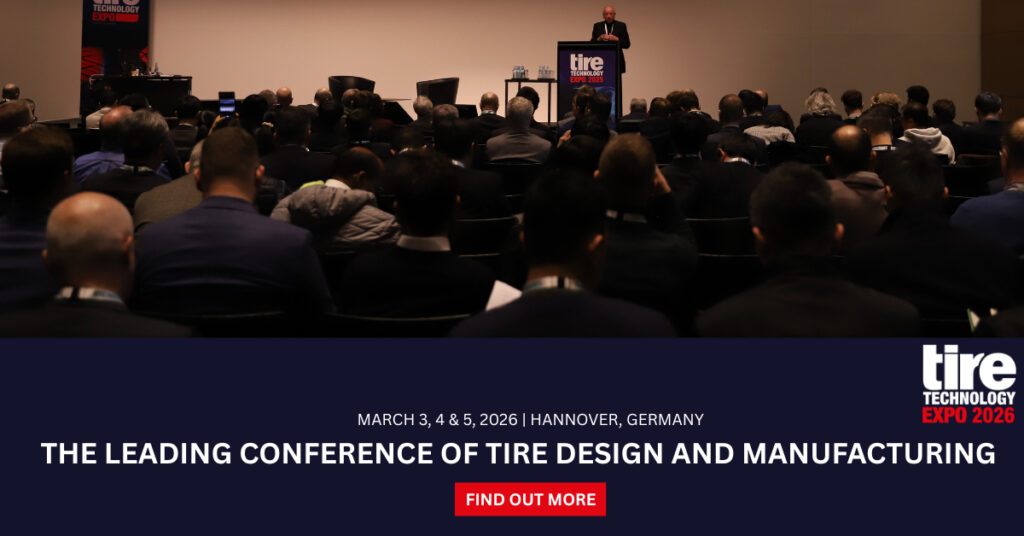


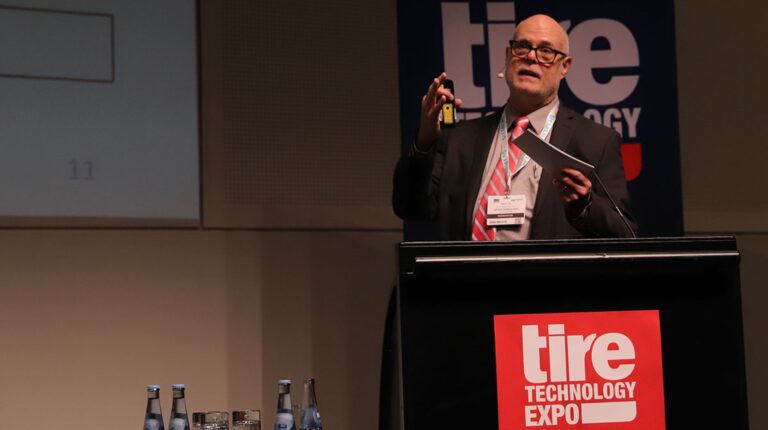
The plenary opening session at Tire Technology Expo 2026 will set the tone for the week ahead. Rather than focusing on a single technology or challenge, this year’s session will bring together three complementary perspectives that reflect the realities tire manufacturers are grappling with today: how vehicles are evolving, how materials and supply chains must transform, and how the industry responds to growing scrutiny of tire emissions and environmental impact.
From autonomous mobility to sustainable monomers and science-based research into tire and road wear particles, the session will offer a snapshot of where tire technology is heading, and what it will take to get there.
Tires in an autonomous world: from concept to commercial reality
Autonomous vehicles have long been viewed as a future disruptor for tire technology. According to Dr Andreas Topp, vice president for platform development and industrialization at Continental, that future is no longer theoretical.
As autonomous systems move beyond pilots and into scaled commercial operations, the tire industry is being asked to support a far more diverse vehicle ecosystem. Purpose-built robotaxis, autonomous shuttles and retrofitted passenger vehicles all place different, and sometimes competing, demands on tire design, validation and industrialization.
Dr Topp’s presentation will explore how tire technology must evolve to meet these requirements, balancing the classical needs of fleets with emerging expectations around durability, predictability and real-life service performance. Particular attention will be given to the role of tires in smart vehicle dynamic controls, where consistent, data-rich tire behavior becomes critical for autonomous decision-making.
Beyond the vehicle itself, opportunities emerge at fleet level. Fully connected tires open the door to optimized operations, predictive maintenance and new approaches to circularity, but they also introduce new technical and organizational challenges. Dr Topp’s session will look at where those opportunities are most tangible today, and where further development is still needed.

Decarbonizing the value chain: from ambition to industrial pathways
Sustainability remains a defining challenge for the tire industry, but the conversation is becoming more concrete. For Michelin’s Dr Garance Lopitaux and Christophe Durand, decarbonization and circularity depend on something very specific: supply chains that are genuinely traceable, measurable and scalable.
Their joint presentation will focus on renewable and recycled butadiene, a critical building block for synthetic rubber, and the different pathways available to reduce its carbon footprint. Rather than positioning solutions as either-or, the session will highlight the need for complementary approaches, including mass balance methods under strict connectivity criteria alongside fully segregated pathways that deliver complete traceability.
A key example is BioButterfly, a technology developed by Michelin in partnership with IFP Energies nouvelles and Axens. The process converts renewable ethanol into 100% bio-based butadiene and has already been validated at demonstration scale, supported by favorable lifecycle analysis and tire demonstrators produced using fully segregated material.
With the technology now ready for its first Axens-licensed commercial unit, the presentation will offer a timely look at how sustainable monomers can move from R&D programs into industrial reality, and what that transition requires in terms of collaboration across the value chain.
TRWP and tire emissions: building decisions on science
The final contribution to the plenary opening session will come from Nicolas Tissier, director of research for the Tire Industry Project (TIP) at the World Business Council for Sustainable Development. His presentation will address an area of increasing regulatory and societal focus: tire and road wear particles and emissions during the use phase.
Drawing on recent progress from TIP’s global research programs, the session will share new findings on how tire and road wear particles (TRWP) are generated, how they move through the environment, and how their potential impacts are assessed. This will include advances in reference sample development, modeling approaches to predict particle transportation, and methodologies for measuring tire emissions in real-world conditions.
Rather than framing the topic in terms of isolated studies, the presentation will highlight how collaborative, science-based work can support informed decision-making across the industry. For manufacturers facing evolving sustainability expectations and regulatory frameworks, the message is clear: robust data and shared understanding are essential foundations for credible mitigation strategies.
Why this conference session matters
Taken together, the opening plenary session offers more than three standalone presentations. It reflects an industry navigating multiple transitions at once – technological, environmental and operational – and doing so through a combination of innovation, collaboration and industrial pragmatism.
For tire manufacturing professionals, these are not abstract discussions. They are conversations that connect directly to product development priorities, investment decisions and long-term strategy. Being a part of them and engaging with peers facing the same challenges is one of the key reasons Tire Technology Expo remains a focal point for the global tire community.
The opening plenary will take place on Tuesday, March 3, 2026, setting the agenda for three days of technical exchange, debate and insight. For those shaping the future of tire manufacturing, it’s a conversation worth joining.
Click here to secure your ticket to the conference.
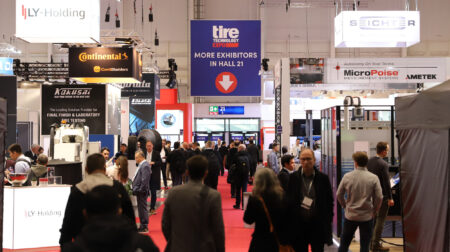
Tire Technology Expo 2026 will take place at the Deutsche Messe in Hannover, Germany, on March 3, 4 & 5, 2026.