

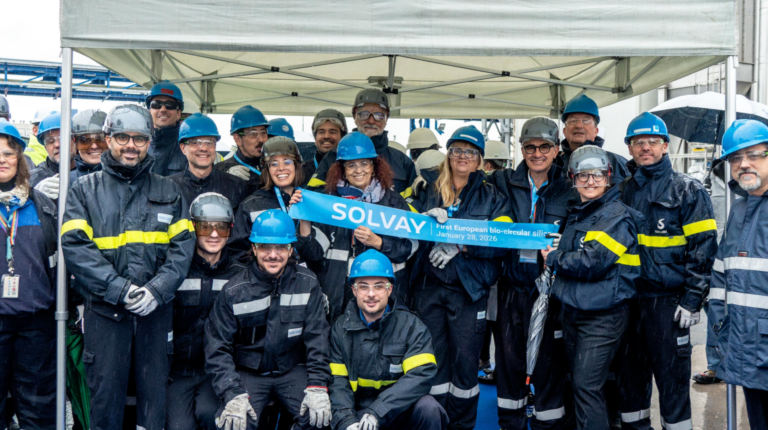
Solvay has opened its bio-circular silica facility at its Livorno, Italy plant, advancing Europe’s industrial shift toward sustainability. The investment supports the European Green Deal and the upcoming Ecodesign for Sustainable Products Regulation (ESPR), while strengthening Italy’s position as a center for green innovation.
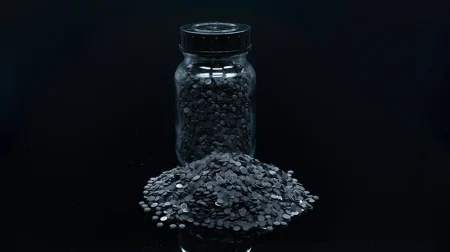
The unit aims to produce highly dispersible silica (HDS) using bio-based sodium silicate derived from rice husk ash, an agricultural byproduct. This breakthrough process reduces CO2 emissions by 35% per ton of silica compared to traditional methods and creates a local circular value chain that benefits the agricultural sector, industry and communities.
“By acting now, Solvay is helping tire manufacturers prepare for future EU requirements and meet their own sustainability goals,” said Philippe Kehren, CEO of Solvay. “Livorno is a tangible example of how we turn circular economy principles into industrial reality, enabling progress for generations.”
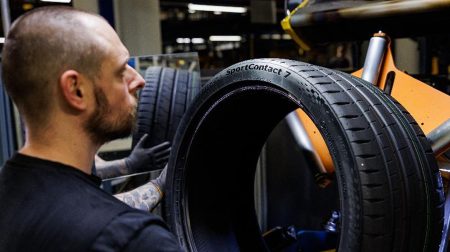
“Solvay has managed to transform an agricultural byproduct into a high-performance material on an industrial scale. We are looking forward to integrating more and more rice husk ash silica as a recycled material in our tire production and are very satisfied with its performance. We are keen on innovative, renewable and recycled materials because they support our ambitious sustainability roadmap,” added Jana Striezel, head of purchasing at Continental Tires.
The Livorno inauguration is part of Solvay’s global circular silica strategy, aiming to transition all silica production sites to ISCC PLUS-certified raw materials by 2026. Livorno is the first site to use rice husk ash, while other locations will utilize local industrial waste streams. Using Solvay’s circular silica allows tire manufacturers to incorporate up to 15% recycled or renewable materials in their tires, supporting their goal of 40% by 2030.
“Livorno sets a benchmark for circular innovation in Europe and beyond,” commented An Nuyttens, president of Solvay’s Silica business. “Our goal is clear: wherever Solvay produces silica, we will integrate circular materials to reduce environmental impact and support our customers’ sustainability objectives.”
In related news, Dunlop and Cabot sign MOU to explore regenerated carbon for sustainable tire production