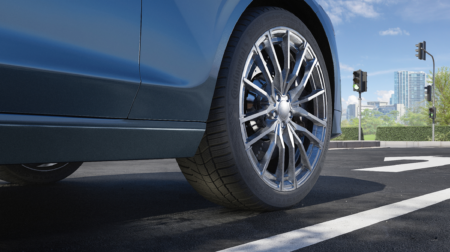


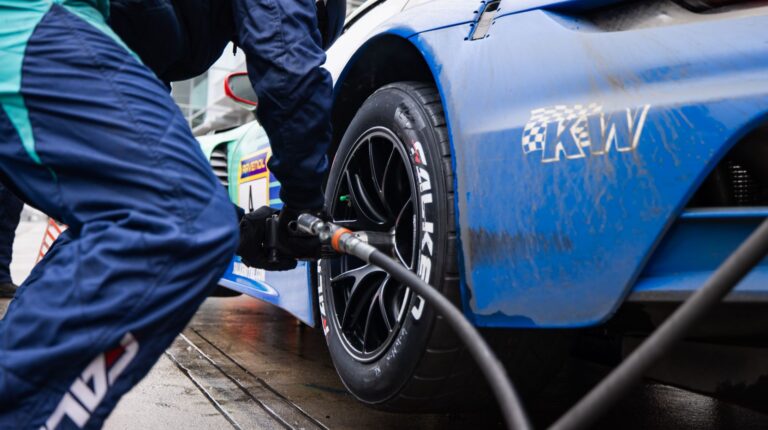
In motorsport and automotive engineering, the pursuit of uplifts and efficiencies is relentless. Every element is scrutinized for its potential to deliver an edge. Tire intelligence, once limited simply to pressure and temperature analysis, has become central to this quest, evolving rapidly as new technologies emerge and old assumptions are challenged. Among these innovations, Sumitomo Rubber Industries (SRI) has developed Sensing Core, a non-invasive, intelligent approach to monitoring tire parameters. Its journey from passenger vehicles to the harsh environment of endurance racing offers a glimpse into how simple but effective innovations can deliver significant opportunities for manufacturers and race teams alike
Sensing Core’s unique advantage comes in the form of its multi-faceted measurement approach. It measures vibrations, changes in the dynamic radius, and other signals, such as yaw rate and engine and brake information, without requiring additional hardware. Based on this, Sensing Core intelligently interprets pressure, grip and wear. What sets Sensing Core apart is its simple logic. Traditional tire pressure monitoring systems (TPMS) monitor each wheel in isolation, triggering alerts only when a predefined threshold is crossed. Sensing Core, by contrast, analyses trends across all four wheels, detecting anomalies that would otherwise go unnoticed. A conventional system sees wheels as individuals, leaving the driver or team to interpret. Sensing Core’s algorithms, however, recognize outliers and anomalies across the set and can alert the team independently before a problem escalates.
The system’s algorithms, rooted in the interpretation of physics-based data taken from the vehicle, run on embedded hardware supplied to car and brake manufacturers. This approach opens up advanced tire intelligence to millions of vehicles worldwide. Over 56 million cars have already been equipped with Sensing Core’s indirect tire pressure monitoring system, and new features like tire wear, grip, load and loose wheel detection are being rolled out.
While Sensing Core has been well proven on the road, 2025 saw the technology’s on-track debut and, with it, a brand-new set of challenges. On the racetrack, tires are exposed to many temperature and pressure changes due to curbs and high speeds. At the Nürburgring, these conditions may change dramatically as code 60 phases (a localized slow zone used on the Nürburgring) come into effect. These circumstances, where extreme variability can easily catch traditional TPMS sensors off guard, are where the multiphase approach of Sensing Core comes into its own. Traditional sensors require the input of a warning threshold, and if the threshold is ever understepped in terms of pressure, the system triggers an alert. Sensing Core’s ability to compare all four tires simultaneously enables the software to intelligently distinguish between a single blowout and a non-hazardous circumstance that affects all tires simultaneously.
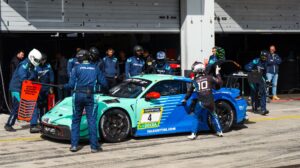
Sensing Core’s racing debut took place during the 2025 Nürburgring Langstrecken-Serie (NLS), on board both of Falken Motorsports‘ Porsche 911 GT3 Rs. Contributing to Falken’s most successful season at the circuit yet, the Falken Porsches ran an early version of the software in the opening rounds, before the full version was rolled out in time for the jewel in the NLS crown, the Nürburgring 24 Hours. Sensing Core was a factor in Falken’s five wins and four 1-2 finishes, and in some cases it detected tire conditions faster than members of Falken’s experienced driver roster.
During the Nürburgring 24 Hours, Falken Motorsports detected a puncture on its #44 Porsche. Sensing Core informed the crew, who relayed the information to the driver, but he disagreed. When he pitted, the team discovered the tire did indeed have a slow puncture. It’s this type of unprecedented early warning that could preserve race pace and avoid damage or lost time. From this point onward, the team’s faith in the technology was cemented.
Beyond the extreme surface conditions present at the Nürburgring, the 20.5km Nordschleife section tests Sensing Core’s connectivity and adaptability. Even in the remote sections of the northern loop, Sensing Core connects to the cloud and delivers data and insights in near real time.

One of the most striking aspects of Sensing Core is its deliberate avoidance of machine learning and artificial intelligence (AI). While many automotive technologies chase the promise of AI, Sensing Core relies on traditional computational logic. This is not a technical limitation but a conscious design choice. Passenger vehicles often lack the computing power to harness complex AI models, and in high-stakes environments such as motorsport, reliability and transparency are paramount, beyond the latency and occasional inaccuracy of a large-language model. The algorithms have been refined over years in road applications, and their performance in racing has validated this approach. In passenger vehicles, all computation is in the car, using embedded software. In racing, the data is processed externally, but the underlying principles remain the same. This continuity allows for rapid iteration and improvement; during the 2025 season, the system was updated race by race, with feedback from engineers delivering incremental enhancements.
Despite its technical sophistication, Sensing Core does not yet provide direct recommendations for car setup or tire development. The potential is there, but the system’s designers are cautious. Tire development is a complicated process, and not all data is equally useful. For instance, a puncture caused by debris offers little insight for improving tire design. However, if repeated issues arise in the same corner or under similar conditions, patterns may emerge. As more data is gathered, Sensing Core could become a valuable tool for identifying such trends, but for now, its primary role is in delivering timely, actionable intelligence.
The system’s independence from tire brand is another notable feature. Although developed by SRI, the owner of Dunlop and Falken, Sensing Core is agnostic and could be used by other tire OEMs, offering teams flexibility on tire brand preference.
Sensing Core’s evolution will likely be shaped by the increasing availability of data and the growing demands of road and race applications. As more vehicles are equipped with advanced telemetry, the system’s algorithms will have richer data sets to analyze, potentially unlocking new capabilities. The prospect of integrating Sensing Core insights into tire development and car setup remains on the horizon, but the foundation has been laid.
Explore: Inside Smithers’ new test facilities in Suzhou, China