

For the Moon, Venturi Space Reinvented the Wheel
Venturi Space (Venturi Lab SA), a Swiss engineering company founded in 2021, develops full lunar rovers and locomotion technologies such as hyper-deformable, non-pneumatic wheels.
The Moon presents extreme challenges for wheel technology, including temperatures from about +130 °C to below –230 °C, vacuum, radiation and highly abrasive regolith. Conventional pneumatic tires and many standard terrestrial materials are unsuitable for these conditions.
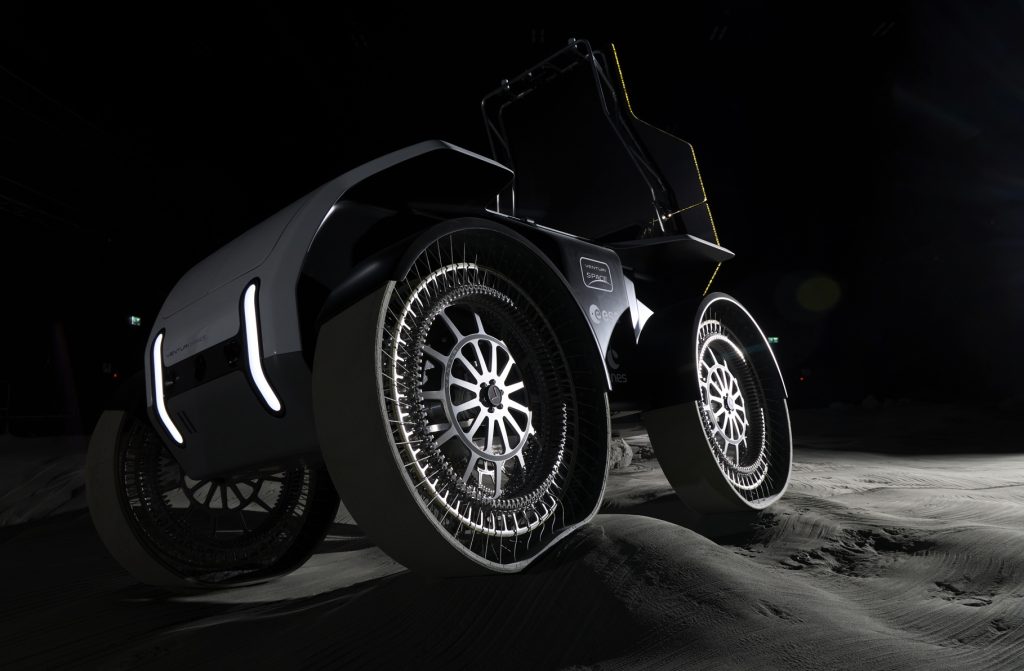
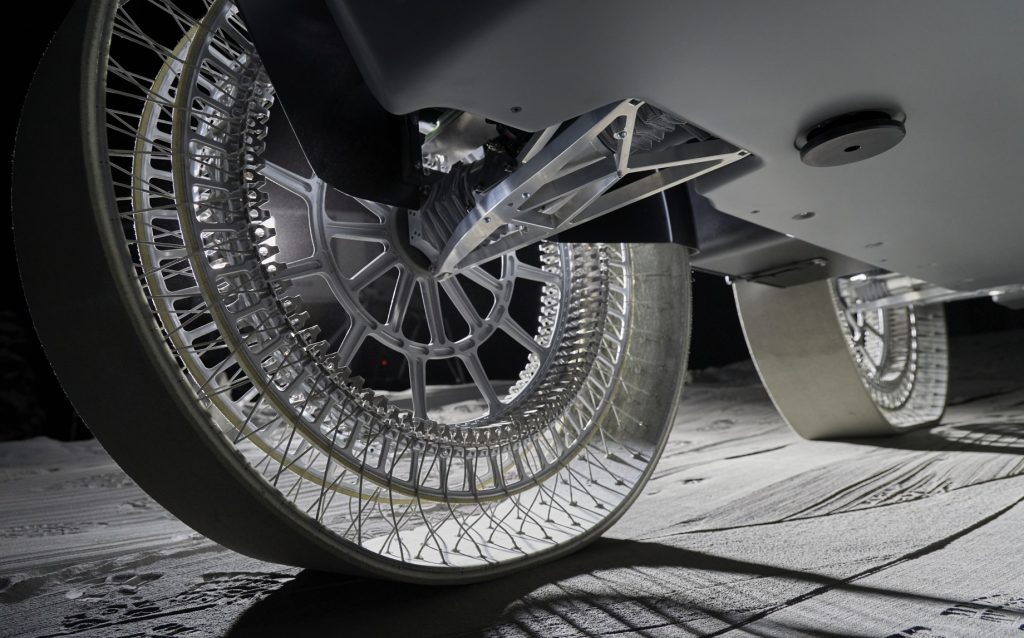
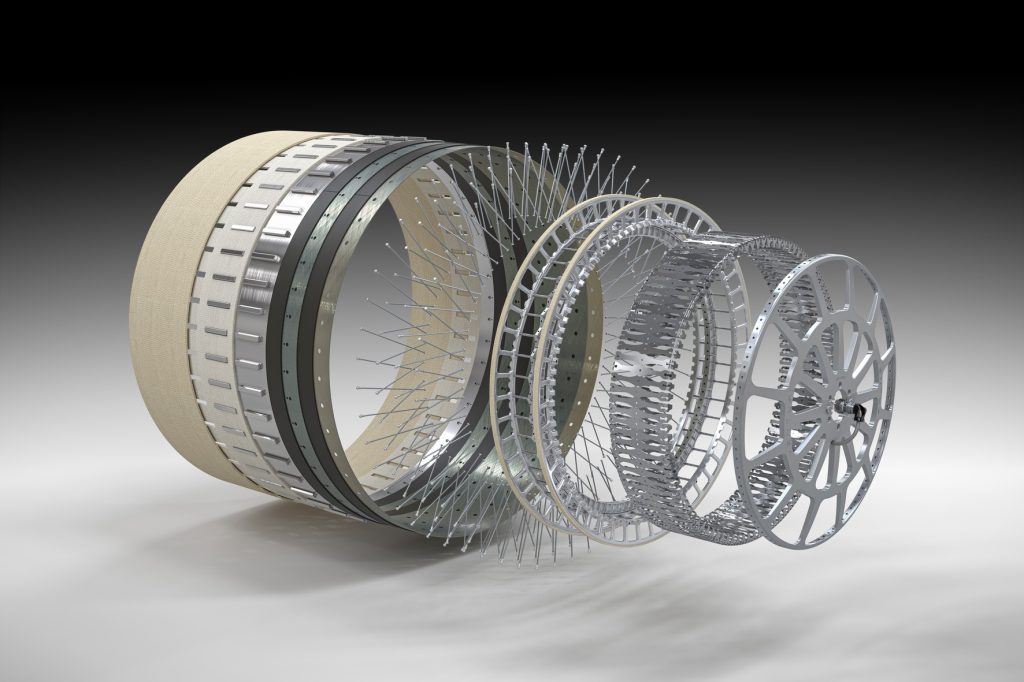
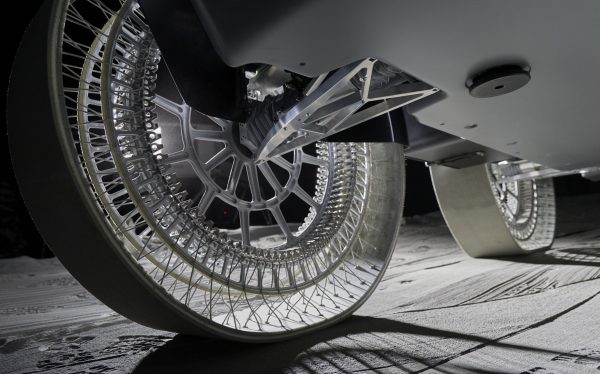
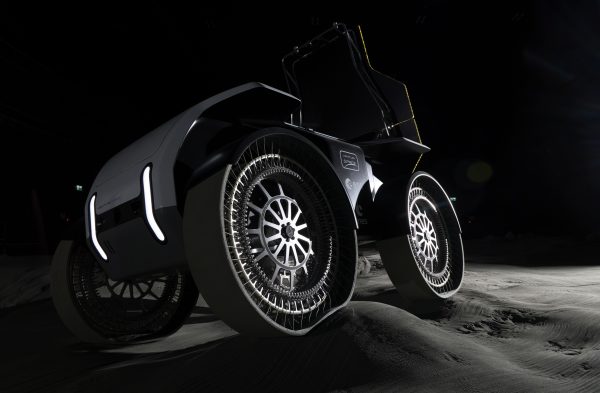
Venturi Space therefore redesigned the wheel from first principles. The resulting 930 mm wheel uses a flexible structural concept with cable-based spokes, spring elements and specially developed materials. Its high deformability allows the wheel to adapt to uneven terrain, create a larger contact area and reduce sinkage in loose lunar soil. At the same time, this improves traction and helps the vehicle overcome obstacles and steep slopes.
The technology has been developed for Venturi Astrolab’s rovers (FLEX, FLIP and NASA CLV-1) and has been designed to carry heavy payloads, travel at speeds of up to 15 km/h and operate over long distances. The wheel concept has since been adapted for the Mona Luna ESA (European Space Agency) rover. The wheels will fly to the Moon end of 2026 on FLIP rover.
Extensive testing is carried out at Venturi Space’s facility in Corminboeuf, Givisiez and Payerne in Switzerland, including endurance, deformation and low-temperature tests down to around –135 °C. NASA has also evaluated the technology through a collaboration involving its Glenn Research Center and Johnson Space Center.
In 2026, NASA selected Venturi Astrolab as one of the suppliers for future crew-capable lunar terrain vehicles transporting astronauts. Venturi Space’s wheel technology is therefore moving from testing and development toward flight qualification and operational use in NASA’s Artemis program.